It seems to be that time of year again when institutions finalize decisions and make preparations to move to a new collaboration environment. Within the past week, I've been contacted by five different schools around the US that are transitioning away from FirstClass to Google Apps Education Edition. I've written about my organization's journey from two years ago here at my blog...this is more of a resource dump intended for anyone out there who might be moving from FirstClass to Google. This is also useful to me as I now have a single link to all of the documents that we found helpful as we went through our transition.
At some point in the near future I'll write a little update reflection on how things have gone over the past 2 years of using Google apps, but for now I'll just provide links to relevant transition support documents.
Best of luck moving to Google Apps!
~Matt
Links, resources and documents:
Our organization's transition support site - a collection of documents, tutorials, videos, etc that documented our migration process.
Rating our transition - what went well - a blog post summary of the things we did well in this process.
Rating our transition - what didn't go so well - we didn't make many mistakes, but this post highlights those areas where we'd like a 'do over.'
General Google Apps security and privacy questions - answers to privacy and data ownership questions can be found in this document. I'll save you a little time here...yes, the data is secure and private. Regarding data ownership-yes, the organization owns the data. Regarding data mining-No, google does not mine and harvest information from Google Apps domains.
Google Apps for Education common questions - SUPER helpful and useful doc
Top 10 Reasons to Switch to Google Apps
Six step deployment plan
Testimonials from other schools who are using Google Apps Education Edition
Wednesday, February 16, 2011


Tuesday, December 14, 2010
Year-in-review through photos
Mostly a personal look back at 2010 via my Flickr PhotoStream...
Wishing you and your family a wonderful holiday season!!!
Peace
Matt
January 2010: We started out the year on a sad note as we said good by to our cat, 'Mr. Kitty,' who owned me for the better part of 14 years. He meant a great deal to us and we were sad to see him go. A special thanks to Dr. Marissa Cruz at the Hawley Vet Clinic for her treatment and care near the end of his life.


April 2010: Erin's mom visited us and we went down to Pacific Grove on the Monterey Peninusula to meet up with her brother and nephew....'twas great fun. We also had great fun visiting with my buddy Dave and his wife Sherrie who were in town for the Big Sur Marathon near the end of April.


August 2010: Weighing in at a very nimble 6 pounds, 3 ounces, little Morgan Kathleen Montagne was born on August 6 at 1:00 am!! This photo was taken minutes after her birth.

September 2010: Baby Morgan's birth announcement photo:

October 2010: Morgan's Aunt Mickey visited us for 5 days!

November 2010: Nana visits Baby Morgan...my mom visited us in the Bay Area for Thanksgiving week. It was so fun having her see Baby Morgan for the first time in person!

December 2010: Baby Morgan in the Christmas tree hat that her Nana made for her...this also happens to be the photo used in our Christmas card this year.

Wishing you and your family a wonderful holiday season!!!
Peace
Matt
January 2010: We started out the year on a sad note as we said good by to our cat, 'Mr. Kitty,' who owned me for the better part of 14 years. He meant a great deal to us and we were sad to see him go. A special thanks to Dr. Marissa Cruz at the Hawley Vet Clinic for her treatment and care near the end of his life.

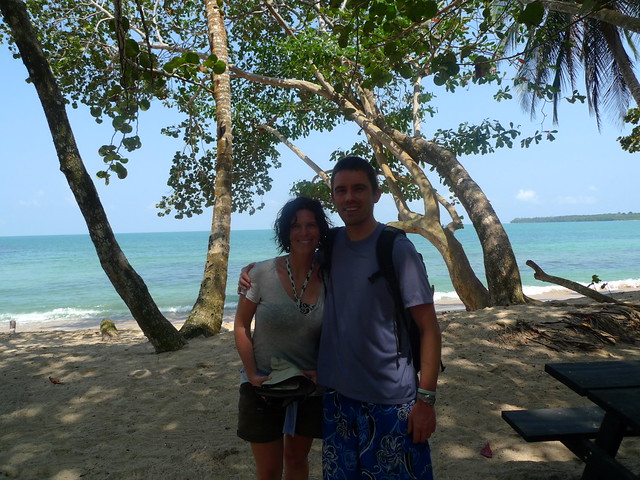
February 2010: Erin and I visited the beautiful country of Costa Rica and had the adventure of a lifetime! Erin was nearly three months pregnant at this point and it was wonderful to have such a great experience together prior to welcoming our new baby in August.
March 2010: Our good friends also had babies this year...as a matter of fact, Karissa (pictured to the left) had her baby in June, Brynn (middle) in July and Erin in August. It was so much fun to experience the process with them throughout the first six months of 2010. This is a picture of the three of them at Karissa and Greg's place.

April 2010: Erin's mom visited us and we went down to Pacific Grove on the Monterey Peninusula to meet up with her brother and nephew....'twas great fun. We also had great fun visiting with my buddy Dave and his wife Sherrie who were in town for the Big Sur Marathon near the end of April.

May 2010: Bucky took every opportunity he could find to sit on Erin's lap during her pregnancy. Erin was roughly 6 months pregnant at the time of this photo.

June 2010: My family visited the Bay Area...Brother Mike and nephews Tucker and Trey visited us for over a week in June...we had a total blast hitting all of the great sights in the area. We mapped out our experience as well...

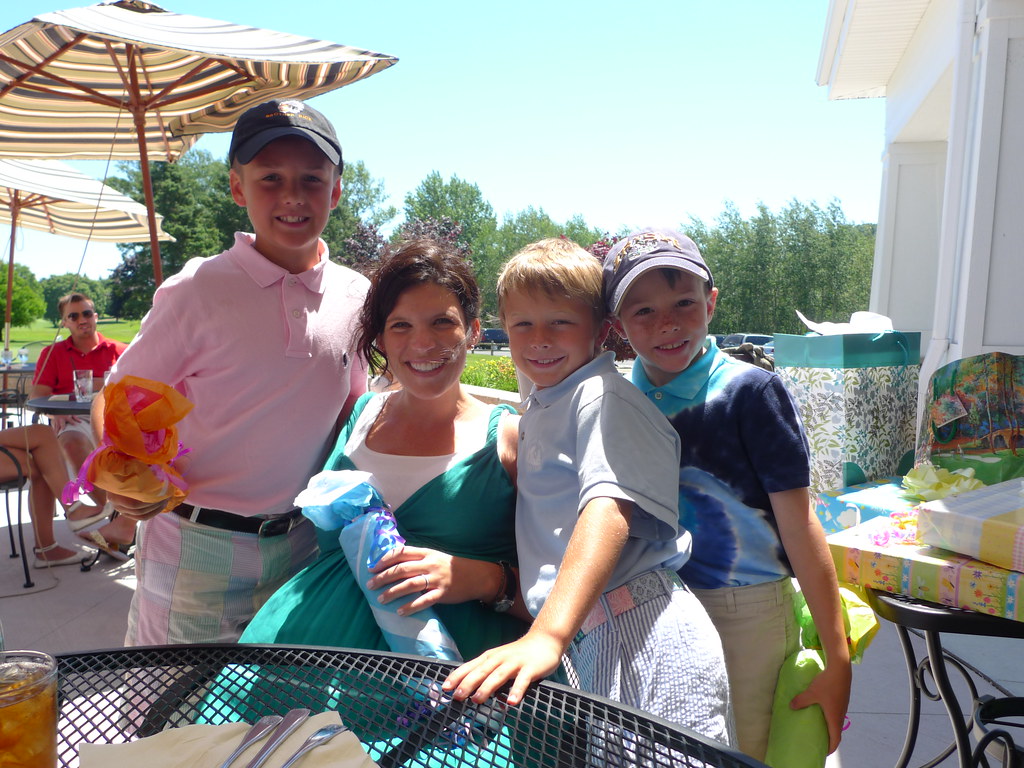
July 2010: Visit to Michigan to see the family. We had a fantastic time visiting with friends and family in Michigan. Pictured alongside Erin are nephews Quinn, Jack and Patrick at a shower that our family threw for us in Lundington!
August 2010: Weighing in at a very nimble 6 pounds, 3 ounces, little Morgan Kathleen Montagne was born on August 6 at 1:00 am!! This photo was taken minutes after her birth.

September 2010: Baby Morgan's birth announcement photo:

October 2010: Morgan's Aunt Mickey visited us for 5 days!
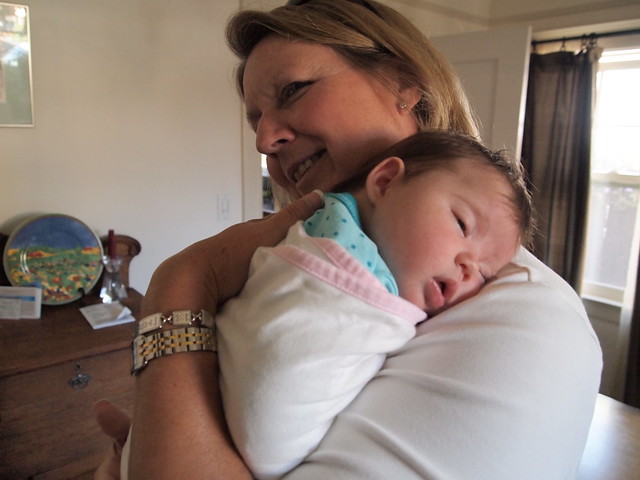
November 2010: Nana visits Baby Morgan...my mom visited us in the Bay Area for Thanksgiving week. It was so fun having her see Baby Morgan for the first time in person!

December 2010: Baby Morgan in the Christmas tree hat that her Nana made for her...this also happens to be the photo used in our Christmas card this year.

On Being Resourceful...
Teachers have always been a resourceful lot. Whether it is the student who shows up to class without their book, limited class access to resources, or only one Internet connected computer in the classroom, we just find a way to make it work. This has always been the case and its no different with digital learning tools. Have the need for photos? Have the students who own a cell phone with a camera take the photos. Need a quick website for a project your class is working on? Create a wiki in wikispaces or a blog in posterous.
Yesterday in our French IV class we had the unanticipated need for a small team of students to do a quick recording and post it online for use within a google site that they were working on. The solution? One of the students had an iPhone so I asked her to install iPadio, do their recording, and then publish it online. After this was done, she embedded it on her team's site (I'm also embedding it below-its in french, which means I have no idea what the students are saying). All told, this process probably took 15 minutes-contrast that with the typical process of tracking down a school owned audio recorder/mic, doing the recording into garageband/audacity, editing, and then posting online.
I can imagine a bazillion other ways to use student owned iOS devices in our classes. Teaching music theory and don't have enough guitars/pianos to go around? Ask students who own an iOS device to install a guitar or piano app. Have a need for students to do some sketching, painting or drawing? Have interested students use a drawing program for their cellphone to try creating in the digital medium (see this piece from the NYTimes titled, "Subway Sketches").
As some of our students return from winter break in January outfitted with new digital devices, I wonder how we can ready ourselves to be resourceful and to make use of student owned technologies in positive ways in our schools.
What are some ways that you've been resourceful in your classroom with digital tools?
Yesterday in our French IV class we had the unanticipated need for a small team of students to do a quick recording and post it online for use within a google site that they were working on. The solution? One of the students had an iPhone so I asked her to install iPadio, do their recording, and then publish it online. After this was done, she embedded it on her team's site (I'm also embedding it below-its in french, which means I have no idea what the students are saying). All told, this process probably took 15 minutes-contrast that with the typical process of tracking down a school owned audio recorder/mic, doing the recording into garageband/audacity, editing, and then posting online.
I can imagine a bazillion other ways to use student owned iOS devices in our classes. Teaching music theory and don't have enough guitars/pianos to go around? Ask students who own an iOS device to install a guitar or piano app. Have a need for students to do some sketching, painting or drawing? Have interested students use a drawing program for their cellphone to try creating in the digital medium (see this piece from the NYTimes titled, "Subway Sketches").
As some of our students return from winter break in January outfitted with new digital devices, I wonder how we can ready ourselves to be resourceful and to make use of student owned technologies in positive ways in our schools.
What are some ways that you've been resourceful in your classroom with digital tools?
Wednesday, December 01, 2010
2010 Edublogs Award Nominations
I'm happy to submit my nominations for the 2010 Edublogs awards via this post. While I'm often not a fan of these types of extrinsic awards, I believe the spirit of the Edublogs Awards is more growth oriented than anything else-and quite honestly, blogging (and most any online work, quite frankly) is still in its infancy and needs systems these this to provide much needed incubation.
With that said, my 2010 nominations follow:
Best Individual Blog: Steve Taffee's 'Blog-Ed Indetermination'
Steve is clever, witty, and a damn good writer-be sure to add this feed to your reader--great blog that often times talks about technology infused pedagogy and methodology (disclosure-I work with Steve).
Best Teacher Blog: Katie Sauvain's 'Keep Asking' - smart, thoughtful and reflective teaching blog written by a middle school english teacher (disclosure-I work with Katie)
Best library blog: Castilleja School Library (full disclosure-I work at Castilleja School)
Best Use of Video: Dan Rezac's 'Mathedemics' YouTube Channel
Best Use of a Social Network: Paul Allison and Company's "Voices on the Gulf" project--an incredible community that has sprouted up to build solidarity with the residents of the Gulf of Mexico region who have been impacted by the BP Oilspill
Best Educational Tech Support Blog: Richard Kassissieh's 'Kassblog'
--I'm not nominating Richard because he is one of the few people to leave a comment on my blog...his work is much, much broader than 'Tech Support" and really is more focused on learning, but its a blog that I like reading and one that I feel is deserving of an Edublog award for sure.
Best School Administrator Blog: Jonathan Martin's 21K12 blog
Best Group Blog: Connected Principals
Best Individual Tweeter: Kevin Hodgson, aka, @dogtrax
Lifetime Achievement: Wes Fryer's 'Speed of Creativity'
With that said, my 2010 nominations follow:
Best Individual Blog: Steve Taffee's 'Blog-Ed Indetermination'
Steve is clever, witty, and a damn good writer-be sure to add this feed to your reader--great blog that often times talks about technology infused pedagogy and methodology (disclosure-I work with Steve).
Best Teacher Blog: Katie Sauvain's 'Keep Asking' - smart, thoughtful and reflective teaching blog written by a middle school english teacher (disclosure-I work with Katie)
Best library blog: Castilleja School Library (full disclosure-I work at Castilleja School)
Best Use of Video: Dan Rezac's 'Mathedemics' YouTube Channel
Best Use of a Social Network: Paul Allison and Company's "Voices on the Gulf" project--an incredible community that has sprouted up to build solidarity with the residents of the Gulf of Mexico region who have been impacted by the BP Oilspill
Best Educational Tech Support Blog: Richard Kassissieh's 'Kassblog'
--I'm not nominating Richard because he is one of the few people to leave a comment on my blog...his work is much, much broader than 'Tech Support" and really is more focused on learning, but its a blog that I like reading and one that I feel is deserving of an Edublog award for sure.
Best School Administrator Blog: Jonathan Martin's 21K12 blog
Best Group Blog: Connected Principals
Best Individual Tweeter: Kevin Hodgson, aka, @dogtrax
Lifetime Achievement: Wes Fryer's 'Speed of Creativity'
Friday, November 12, 2010
Gator Radio set to return on Nov 19th!
I'm pleased to say that our student run, student operated live Internet radio project known as the Gator Radio Experience, is set to return on Friday, November 19th at 2:50 PM Pacific time. As many of you know, this project has been the highlight of my recent professional existence and I was sad to see it fall victim to the busy schedules of our students last year. The show is redesigned this time around to be much shorter (30 mins this year vs 60 mins previously) - this should help with the overall sustainability of the project. The students still plan on including an interview segment, a music spot, and then some type of op/ed review piece. At this point we're going to aim for 2 live broadcasts per month and if things go well, we'll try to ramp up the project so we're doing weekly broadcasts.
 This year we'll be conducting our shows here at school using this new setup that I put together with the guidance of one of our parents, Steve Fields, who is an audio engineer (a HUGE thank you is in order to Steve for his time and help!) We'll try to have him on one of our first few shows to talk a bit about the setup and how it works. For project updates be sure to follow our Twitter page, join our Facebook group, subscribe to email updates at our website.
To satisfy your inner-nerd, here is the equipment and software that we're using to produce our shows:

To satisfy your inner-nerd, here is the equipment and software that we're using to produce our shows:
Behringer Xenys 1204USB Mixer
ART Five Channel Headphone Mixer/Amp
Sennheiser HD202 Headsets
Electro-Voice Model 664 Mics (purchased on eBay and refurbished by Steve)
Garageband for recording high quality audio for the podcast - click here to subscribe to our shows in iTunes
Ustream for the live audio broadcast - click here to access our channel
Wednesday, November 10, 2010
Madsen Cycles Link Contest
My apologies about the non-standard theme of this post, but I can't turn down the opportunity to win a bike as cool as the one below from Madsen. If I win, my wife will kill me for bringing another bike in the house...if you'd like the chance to win a sweet Madsen cargo, follow this link to learn more. I believe they announce a winner on Nov 17th.
And in the event that I do win, here is my email address for the folks from Madsen: mjmontagne at geemail dot com.
Hat tip to Rob Rowe for posting this on his blog recently.

And in the event that I do win, here is my email address for the folks from Madsen: mjmontagne at geemail dot com.
Hat tip to Rob Rowe for posting this on his blog recently.
Friday, November 05, 2010
Forget merit pay - fund innovation instead
The notion of tying teacher pay to student performance of any type makes me sick all the way out to my fingers and toes. People do irrational things all the time for money-merit pay is destined to create a culture of unethical behavior in schools that fall for this. However, I think money can be used to directly fund and support teacher innovation in all sorts of interesting and meaningful ways.
Instead of merit pay to teachers in exchange for student performance on standardized tests, what if we were to do the following types of things:
1. Fund teachers to write open source texts for the CK12 Flexbook project.
2. Fund teachers to participate in professional learning communities on topics of interest.
3. Fund teachers to go to conferences. Fund teachers to create conference learning opportunities for their own school or district.
4. Fund teachers to participate in free online learning opportunities.
5. Fund teachers to take online courses. And then fund them to create their own online courses with the explicit understanding that the materials would be fully licensed in the Creative Commons as open educational resources available to all.
6. Fund teachers to travel to a place where they can have an experience that will help them become better teachers.
7. Fund teachers to work on special projects with students after school and on the weekends.
8. Fund teachers to engage in regular professional growth and learning.
9. Fund teachers for developing their own professional portfolios online. And then fund teachers who are interested in building portfolio assessment experiences for students.
10. Fund teachers for integrating play based learning into the curriculum.
11. Fund teachers who are interested in connecting their classes with the local community and the world
12. Double the funding for teachers who do any of the above in collaborative teams.
Instead of merit pay to teachers in exchange for student performance on standardized tests, what if we were to do the following types of things:
1. Fund teachers to write open source texts for the CK12 Flexbook project.
2. Fund teachers to participate in professional learning communities on topics of interest.
3. Fund teachers to go to conferences. Fund teachers to create conference learning opportunities for their own school or district.
4. Fund teachers to participate in free online learning opportunities.
5. Fund teachers to take online courses. And then fund them to create their own online courses with the explicit understanding that the materials would be fully licensed in the Creative Commons as open educational resources available to all.
6. Fund teachers to travel to a place where they can have an experience that will help them become better teachers.
7. Fund teachers to work on special projects with students after school and on the weekends.
8. Fund teachers to engage in regular professional growth and learning.
9. Fund teachers for developing their own professional portfolios online. And then fund teachers who are interested in building portfolio assessment experiences for students.
10. Fund teachers for integrating play based learning into the curriculum.
11. Fund teachers who are interested in connecting their classes with the local community and the world
12. Double the funding for teachers who do any of the above in collaborative teams.
Sunday, October 31, 2010
New blogs are born & thoughts on our student blogging workship
Last week I co-facilitated a Wednesday morning professional development session on the topic of, "Student blogging." Click here to access the resource document that we created for our attendees. This was a part of a periodic series of workshops known as "Learning Exhanges" - this is something new that we're trying as a way to promote sharing of all forms in our school community. Our session was very well attended and we set out to answer the following great, big question:
In the context of this session on blogging, I'd like to link to five blogs that have been born over the past 6 weeks at my school.
Middle School online newspaper - this is the first online newspaper at my school, and it comes from our middle school students and teachers. Please leave a comment or two if you have a moment
Philosophy Class Lectures - Teacher Bill Smoot is posting all of his lectures for his semester long course on Philosophy. They are all available in iTunes as well.
Mobile Learning Group Blog - I mentioned this in a recent post. This is a group blog being authored by 16 colleagues at my school who were all given an iPad with the expectation that we'd engage in regular professional development around this topic.
Stories from Advisory - I started this as a tool to keep the parents of my sophomore student advisory (sophomores in USA schools are typically 15-16 years old). Parents can be so valuable in extending the conversations that are often times initiated in school activities like advisory - conversations at the dinner table can be dramatically altered and improved when parents have a little insight into the school day happenings.
Latin American Caribbean History Group Blog - this group blog was a compromise that we made with the students in this class who felt very insecure about blogging - generally speaking, the students didn't feel like they should be writing in a public space about a topic they weren't 'experts' on. So we compromised and they came up with the idea to co-author in a group blog. Posts should start appearing this week. Please comment!!!
How can we use blogging and other online writing opportunities to provide opportunities for students to reflect on their learning, publish for a large audience, break the myth of perfectionism, and as a tool for formative assessment?As so often happens in these types of tech-related learning sessions, the questions from our attendees seemed to focus around things like platforms and the 'how to' types. Not that these aren't important-they are-but as far as I'm concerned they're secondary in comparison to the ones posed in the big question. My co-facilitator and language learning teacher extraordinaire, Flaurie Imberman, summed it up well when she talked about the many challenges that we've experienced in using blogging our Latin American and Caribbean History course. She mentioned that our experience has been difficult because most of the work that we do with students in our classes is highly private. Very rarely do we ask them to open up and share their thoughts, processes, and final products with an audience that goes beyond the teacher. Blogging, if approached properly, certainly has the potential to serve as an antidote to the privatization of class work, teaching and learning.
In the context of this session on blogging, I'd like to link to five blogs that have been born over the past 6 weeks at my school.
Middle School online newspaper - this is the first online newspaper at my school, and it comes from our middle school students and teachers. Please leave a comment or two if you have a moment
Philosophy Class Lectures - Teacher Bill Smoot is posting all of his lectures for his semester long course on Philosophy. They are all available in iTunes as well.
Mobile Learning Group Blog - I mentioned this in a recent post. This is a group blog being authored by 16 colleagues at my school who were all given an iPad with the expectation that we'd engage in regular professional development around this topic.
Stories from Advisory - I started this as a tool to keep the parents of my sophomore student advisory (sophomores in USA schools are typically 15-16 years old). Parents can be so valuable in extending the conversations that are often times initiated in school activities like advisory - conversations at the dinner table can be dramatically altered and improved when parents have a little insight into the school day happenings.
Latin American Caribbean History Group Blog - this group blog was a compromise that we made with the students in this class who felt very insecure about blogging - generally speaking, the students didn't feel like they should be writing in a public space about a topic they weren't 'experts' on. So we compromised and they came up with the idea to co-author in a group blog. Posts should start appearing this week. Please comment!!!
Tuesday, October 26, 2010
Remixing the "Internet and Privacy" Graphic
I posted about this great graphic from the Flowing Data website that has been making the rounds on Twitter at the end of last week. As I said, it really jibes with my thinking about how I conduct myself online.
Due to the incredible amount of attention that tends to prop up every three months or so about Facebook's privacy policies, I immediately thought of the following remix:

Due to the incredible amount of attention that tends to prop up every three months or so about Facebook's privacy policies, I immediately thought of the following remix:

The more I thought about it, the more I realized that ANYTHING attached to the Internet belongs in the orange circle, including organizational email systems AND school networks.
So I revised the above Venn diagram to look like the following:
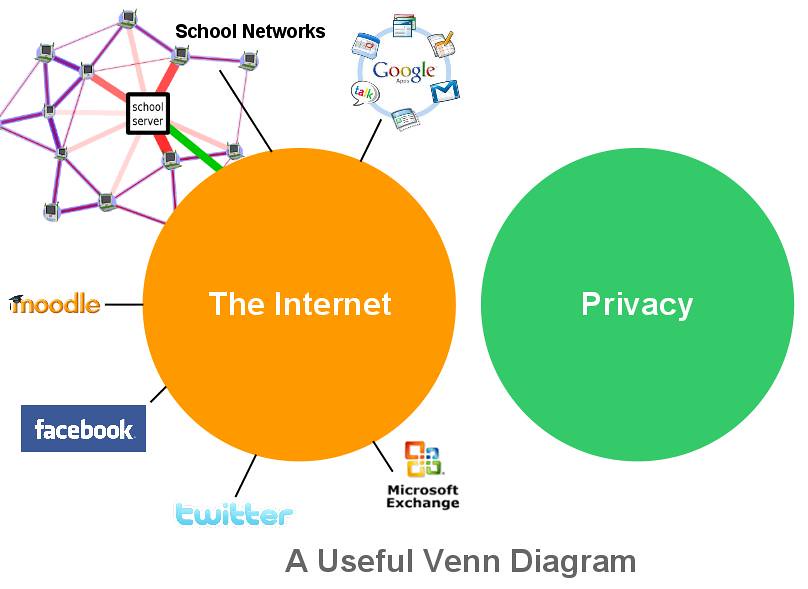
The bottom line for me?? If I want my information to be totally and completely private, I shouldn't digitize it on any device or platform that is connected to the Internet.
How about you?? How might you remix or revise any of these Venn diagrams or the original from Flow Data?
Mobile Learning Study Group

Like many other schools, folks in my community are quite interested in learning more about the possibilities of highly portable mobile devices like the iPad, cellphones, iPods, etc as tools to personalize, customize, deepen and amplify learning. As a result, we recently launched a study group that is dedicated to learning more about mobile devices like the iPad. Teacher participation in this group is totally voluntary and I’m pleased to say that we have 16 participants!
In exchange for participation in the group, all members were given a small budget to go out and purchase an iPad model of their choosing, some accessories, and software (we're fortunate to have a GREAT relationship with the Apple Store on University Avenue in Palo Alto). Most participants chose the 16 GB model, but a few upgraded to the 3G capable models (some teachers went over budget and had to go into their own personal budgets to pay the difference). The expectations for the participants are posted over at the ‘About’ section of our blog. We chose this hardware/software distribution model because the iPad is a VERY personal device that is nearly impossible to manage using traditional IT practices. If this goes well, I might recommend that our school scale this distribution model to teacher laptops-eg, instead of the school’s IT department giving each teacher a standard hardware/software configuration every four years, we’d give folks a stipend of a certain amount so they could go out and choose the hardware/software mixture that works best for their needs.
One of the requirements for participation in this group is to submit blog posts to our group blog throughout the year. Stop by our blog and subscribe via email or RSS to keep up with our group’s progress and thinking throughout the year.
*image courtesy of FoxyCroxy on Flickr (Creative Commons License)
Subscribe to:
Posts (Atom)